Address
Registered office address 4 Dorset Road, London, England, SE9 4QT
Work Hours
Monday to Friday: 7AM - 10PM
Weekend: 9AM - 8PM
Email Us
enquiries@vantixbio.co.uk.
Address
Registered office address 4 Dorset Road, London, England, SE9 4QT
Work Hours
Monday to Friday: 7AM - 10PM
Weekend: 9AM - 8PM
Email Us
enquiries@vantixbio.co.uk.
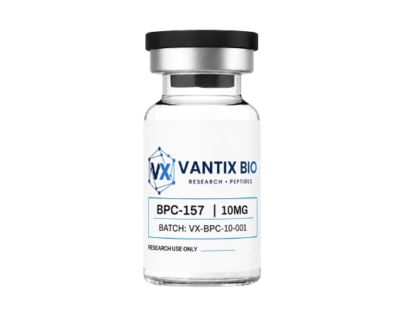
Price range: £46.00 through £65.00
A 15-amino-acid synthetic peptide from a partial sequence of human gastric juice protein. One of the most cited regenerative-research peptides.
Answers to the questions researchers ask us most often, all in one place.
Yes. Every batch is independently verified using Janoshik HPLC testing.
Each product batch is analysed by Janoshik Analytical, an independent peptide-testing laboratory based in the Czech Republic. Purity results are consistently reported above 99%.
If a current batch has an available Janoshik report, a printed Certificate of Analysis (COA) is included with the order. If not, the verification record is made available through our Purity page.
Every COA contains a unique verification code that can be checked directly through Janoshik’s verification system, allowing researchers to confirm results independently.
1. Clean the vial surface
Use an alcohol prep wipe from the supplied kit to disinfect the vial stopper. Allow it to dry.
2. Draw bacteriostatic water
Using an insulin syringe, draw 2 mL of BAC water and insert the needle through the rubber stopper.
3. Add the solution slowly
Inject the BAC water gradually down the inside wall of the peptide vial. Avoid directing the stream directly onto the powder.
4. Dissolve gently
Swirl the vial carefully until fully dissolved. Do not shake. Allow approximately 30 seconds, then store refrigerated.
The reconstitution guide included inside the packaging can be used as a reference for future preparations.
Attach a new needle
Clean the pen tip using an alcohol wipe, then securely attach a fresh foil-wrapped needle.
Prime before use
Turn the dial one click, hold the pen with the needle facing upward, and press the dose button. A small droplet at the needle tip confirms successful priming and removal of trapped air.
Set the research amount
Each dial click represents a fixed increment based on the pen calibration. The dose display indicates the total selected amount.
For example, a 6 mg research setting may correspond to approximately 6–12 clicks depending on calibration.
Use the research route described in published studies
Published cohort protocols commonly describe subcutaneous administration sites such as the abdomen, thigh, or upper arm. Hold the pen in position for several seconds before removal.
After use
A single pen provides the number of uses listed in the protocol information for the selected size. When empty, replace the cartridge while continuing to use the same pen body.
Research use only. This information describes published research procedures and does not provide medical or human-use guidance.
Published research involving BPC-157 describes subcutaneous administration routes in experimental settings, including sites such as the abdomen, thigh, and upper arm.
Research protocols commonly rotate administration sites to reduce repeated local stress.
This information is provided solely as scientific context from published literature. We do not provide dosing instructions, medical recommendations, or human-use protocols.
Reference: Sikiric et al. 2018
The appropriate approach is to follow the research protocol framework provided above.
Published BPC-157 research commonly uses gradual escalation approaches, beginning with lower study phases before progressing to later stages. The highlighted maintenance phase represents where many published research protocols stabilise.
Researchers generally begin with the earliest study phase before progressing sequentially through later phases.
Researchers familiar with the compound can review the protocol phases to identify the appropriate research stage and compare vial or pen requirements.
Contact our team before ordering if your research design differs from standard schedules. We can help identify the most suitable product format and quantity based on your planned study requirements.
Research use only. Information is based on published scientific literature and does not constitute medical advice. Consult a qualified professional for any human-use considerations.
Reference: Sikiric et al. 2018
| Property | Details |
|---|---|
| Compound | BPC-157 (Body Protection Compound-157) |
| Sequence | Gly-Glu-Pro-Pro-Pro-Gly-Lys-Pro-Ala-Asp-Asp-Ala-Gly-Leu-Val |
| Amino Acid Count | 15 (pentadecapeptide) |
| Molecular Formula | C₆₂H₉₈N₁₆O₂₂ |
| Molecular Weight | Approximately 1419.5 g/mol |
| CAS Number | 137525-51-0 |
| Origin | Fragment derived from Body Protection Compound isolated from gastric juice |
| Format | Lyophilised powder supplied in sealed vial |
| Research Purity | >99% HPLC verified batch-by-batch |
BPC-157 refers to a synthetic 15-amino-acid peptide fragment associated with Body Protection Compound, a protein originally identified in human gastric juice.
Since its early investigation in the 1990s, BPC-157 has been studied extensively in preclinical laboratory models exploring peptide stability, cellular signalling, and biological pathways.
Its reported stability characteristics have contributed to its frequent use in laboratory research involving peptide signalling models.
Published preclinical studies have explored BPC-157 across several research areas. These summaries describe findings reported in scientific literature and do not represent claims of therapeutic effects in humans.
A significant body of preclinical research investigates BPC-157 in tendon and connective-tissue models, including studies involving tendon-derived cells and repair-related pathways.
Because of its historical association with gastric-derived compounds, many studies examine BPC-157 within gastrointestinal cellular and signalling models.
Research groups have also investigated interactions between BPC-157 and nitric oxide-related signalling pathways in experimental models.
Researchers interested in the literature commonly search databases using terms such as:
These searches identify key publications from Sikiric’s research group and later studies.
Researchers studying BPC-157 may also explore related compounds appearing in preclinical literature:
Explore comparisons such as:
BPC-157 vs TB-500
A side-by-side comparison covering research background, handling requirements, and laboratory considerations.
Sikiric P. et al.
Stable gastric pentadecapeptide BPC 157 – preclinical reviews.
PMID: 29360469
References are independent scientific publications. Vantix Bio has no affiliation with the researchers or publications listed.
| Size | 10mg |
|---|---|
| Format | Pen, Vial |

Reviews
There are no reviews yet.